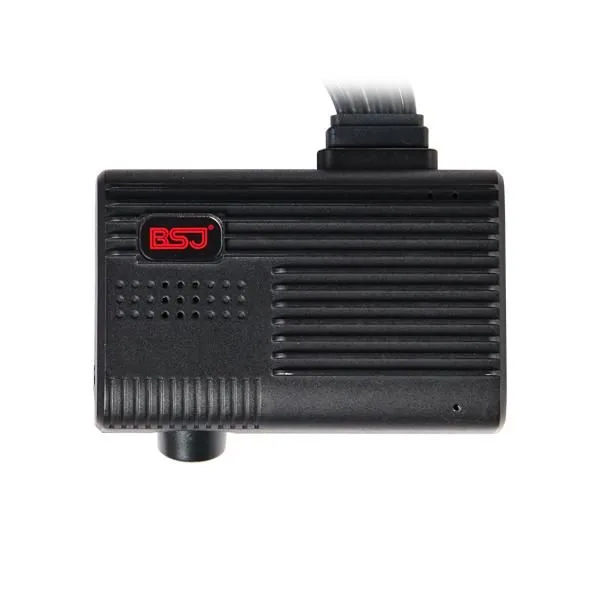
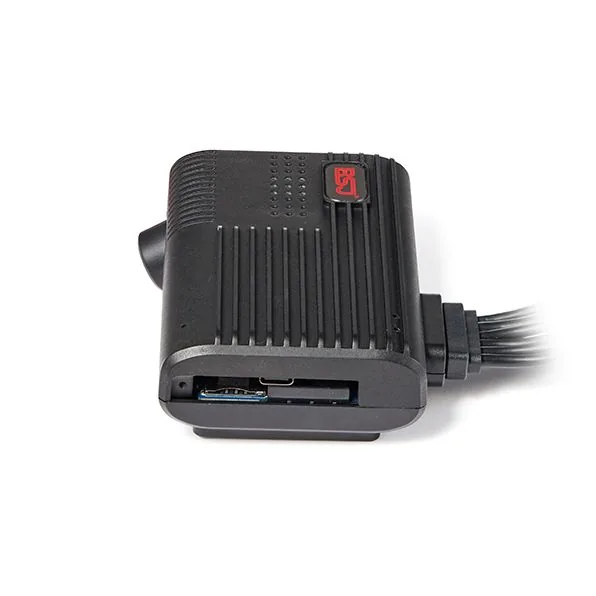
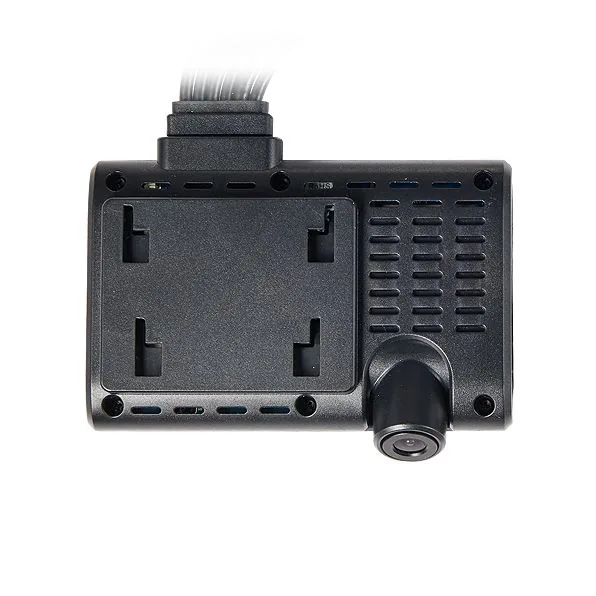
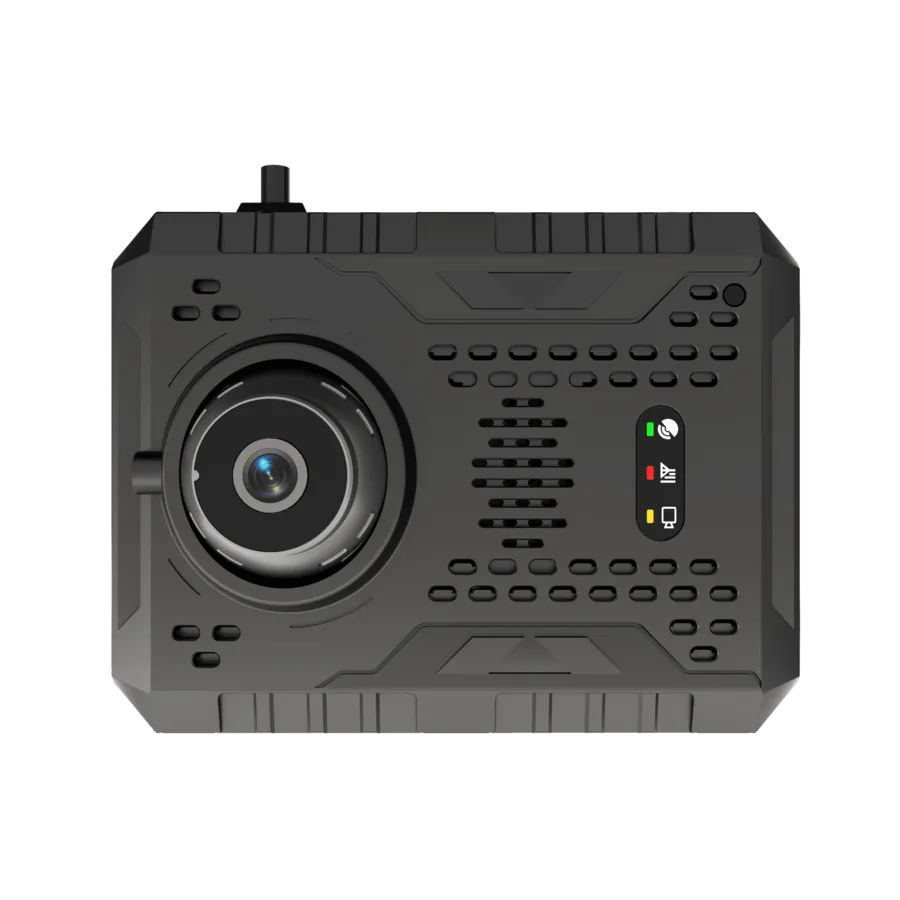
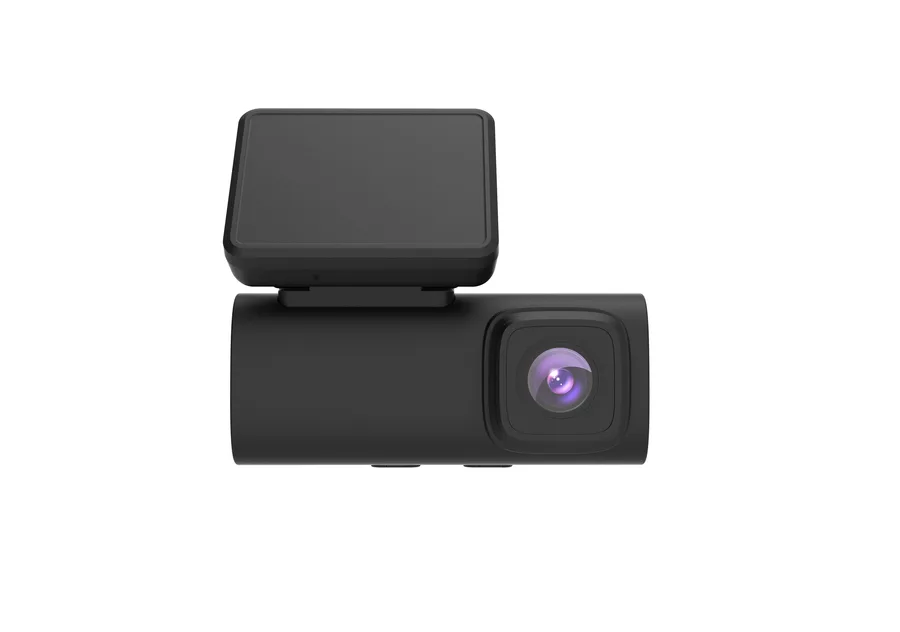
Transcribed from the manufacturer's own product page. Certificates are issued per
device, not per manufacturer — ask us for the certificate of this model before you
commit to a market.
Everything here is transcribed from the manufacturer's dimension drawing and I/O table.
It is the half of the specification an installer needs and the half nobody publishes.
110 × 70 × 45 mm, to scale against a bank
card. A box has three distinct silhouettes; the datasheet gives three numbers and does not say
which face it calls the front, so they are labelled by dimension rather than guessed at.
Three analogue camera leads: yellow video, white audio, black ground, red 5 V out on each.
B5 — I/O
The second block of inputs.
B6 — RS232
Serial. One of the two dash cams in the line that has one.
SIM
Nano SIM.
Type-C
Debug and configuration. Not a power input.
TF card ×2
32–512 GB each, Class 10 or better.
Out of the power connector — 8 lines
The loom, wire by wire
Colour
Signal
What it does
Red
V+
Permanent 9–36 V. Fuse it at the take-off, not at the device.
Orange
ACC
Ignition sense. This is the wire that decides when the camera sleeps, and the one most often taken off a fuse that is live with the key out.
Black
GND
Chassis earth. A painted bolt is the commonest reason a camera reboots on a cold start.
White
SOS
Panic input, pulled to ground by a button. The clip it saves is the one that goes to the insurer.
Grey
Left turn / DIN_H1
Indicator sense, so a lane-departure warning knows the driver meant it.
Purple
Right turn / DIN_H2
The other indicator. Same job, other side.
Yellow
Fuel−
out
Low-side output for a fuel-cut relay. It switches the relay, never the pump.
Brown
ADC
Analogue input: a capacitive fuel sender, a temperature probe, a body switch.
7 lines in, 1 line out.
Colours are transcribed from the manufacturer's own drawing and are not a substitute for a
multimeter on the first vehicle of a batch. Six labelled blocks on one edge, B1 to B6. The camera leads carry their own 5 V, so a fourth channel does not need a second power take-off.
03 — Through the OBD port
What the diagnostic port can and cannot do here
Not one device in this catalogue has an OBD-II connector or a CAN transceiver. That is worth knowing before a tender is answered, because “OBD” in a specification usually means two different jobs and only one of them is possible with this hardware.
What the port is still good for: power
Pin 16 of the SAE J1962 connector is battery positive (12 V on a Type A, 24 V on a Type B), pin 4 is chassis ground and pin 5 is signal ground. An OBD take-off lead gives V+ and GND with no splicing, which is why hire fleets and short-term fits use one. Two catches: on most vehicles that pin is live with the key out, so ACC still has to come from a switched fuse, and a lead hanging off the column gets kicked loose.
What it cannot give you: the bus
Road speed, engine RPM, odometer, engine hours, fuel level and fault codes live on CAN, on pins 6 and 14. There is no CAN on any of these devices, so none of it reaches the camera. Speed and position come from the GNSS receiver instead, and harsh-driving events from the on-board accelerometer.
Where vehicle data does come from
Discrete inputs and the analogue line on every model: ignition, indicators, a panic button, a fuel sender on ADC. On the recorders and the EH15-V2 it goes further — brake and door inputs, 1-Wire for driver identification, and RS485 for the sensor bus. A CAN or FMS gateway on RS232 is the obvious next step, and we have not tested one: whether BSJ's firmware parses a third-party gateway is a question for them, and until somebody runs it on a bench this site is not going to claim it works.
If a customer's specification says OBD, ask which they mean. Powering off the port takes a €10 lead. Reading the bus needs a device that has CAN on it, and that is a different box beside this one, not this one.
Pinout from the SAE J1962 connector tables; I/O from each model's own datasheet, linked above.
04 — What it means in service
On FleetSight
Two cards means a full terabyte on board: the deepest free cold tier in the line-up
Fuel ADC and turn signals arrive as telemetry, so a fuel drop is an event with video
The highest AI budget here — four channels analysed, not just recorded
The platform speaks the camera protocol and is tested end to end against a device
simulator. It has not yet run against this model on a bench — the first real camera
is the milestone we are working to, and we will say so here when it passes.
Where it runs
Wialon lists the previous revision of this model (BSJ Video, port 22694); the V2 board is being added with the vendor.
flespi parses BSJ telemetry for one tracker only and no video; Navixy has no BSJ
connector yet.
Camera-class devices run from €145 to €189 to
the integrator, by annual volume. The exact figure for this model is on the current
price list — it moves with the exchange rate and the batch.
Nothing streams in the background. Over the SIM the camera sends telemetry, events and
one frame per event — around 40 MB a month; a clip goes up only when someone asks for
it, and only for the window they asked for. That is roughly €0.12–0.23 of
cellular data a month per vehicle, against the €9 a month a
stream-everything architecture spends before anybody has watched a thing.
How it goes in
Forty-five to ninety minutes in a van, at €90–170 of auto-electrical labour, and the last step is the one that gets skipped: a vehicle is not fitted until a frame from it has reached somebody's screen.
The camera it is quoted against is usually a Streamax: €284–397 ex VAT at a European distributor, and their cloud is €4.49–11.21 a vehicle a month on top of that.
Put the EH03T-V2 in a vehicle before you commit to a batch.
Two demo units, configured for the platform you run and the vehicle you fit, with the certificate position for your country in writing. Tell us the fleet and we quote the configuration rather than the catalogue.
Specification read from the manufacturer's page on 20 September 2026:
bsjiot.com/EH03T-V2 . Photo by the manufacturer. If a figure here disagrees with the datasheet you were
sent, the datasheet wins and we want to hear about it.
Price list and two demo cameras
Put one in a vehicle before you decide.
Tell us the platform you run, the vehicles you fit and roughly how many cameras a year. You get the current price list, the certificate list for the models you care about, and two demo cameras configured for your platform before they ship — at your own trade price, credited against your first order.